<?xml version="1.0" encoding="utf-8"?><feed xmlns="http://www.w3.org/2005/Atom" ><generator uri="https://jekyllrb.com/" version="3.10.0">Jekyll</generator><link href="https://primedpixel.co.uk/feed.xml" rel="self" type="application/atom+xml" /><link href="https://primedpixel.co.uk/" rel="alternate" type="text/html" /><updated>2026-07-21T19:52:55+01:00</updated><id>https://primedpixel.co.uk/feed.xml</id><title type="html">Primed Pixel</title><subtitle>Blogs, essays, poems, and a lot of nonsensical 3 am ramblings from some idiot on the Internet who thinks himself too good to be sincere in other places on the web... and he&apos;s right.</subtitle><author><name>Malachy Moran-Tun</name></author><entry><title type="html">Okay, so…</title><link href="https://primedpixel.co.uk/blog/poems/okay-so/" rel="alternate" type="text/html" title="Okay, so…" /><published>2026-07-20T23:13:01+01:00</published><updated>2026-07-20T23:13:01+01:00</updated><id>https://primedpixel.co.uk/blog/poems/okay-so</id><content type="html" xml:base="https://primedpixel.co.uk/blog/poems/okay-so/"><![CDATA[<h2>‎</h2>
<h3 id="okay-so">Okay, so…</h3>
<p>I’ve tried this once before<br />
But I boxed myself in too deeply,<br />
Into a single façade of my<br />
Overall character</p>

<p>Okay, so…<br />
All I want from this<br />
Facet of my life<br />
Is to show what I enjoy<br />
To others who enjoy</p>

<p>Okay, so…<br />
I’ll try not to overthink<br />
For I know what I’ll keep<br />
And in which places<br />
I’ll hide my limits</p>

<p>Okay, so…<br />
I hope I’ve figured out<br />
The motivation that I need<br />
To carry on enjoying<br />
As ridiculous as I sound</p>

<p>Okay, so…<br />
Please forgive my scattered writing<br />
My overuse of this or that<br />
The improperness or impoliteness</p>

<p>And a bad ending here or there…</p>

<h1 id="some-ramble">Some Ramble</h1>
<h2 id="social-media-and-creating">Social Media and Creating</h2>
<p>I was never an avid social media poster; I got quite into browsing sites like Reddit and Twitter on a daily commute when I was younger, but then I slowly stopped using Reddit, and Twitter became a cesspool. But, I always felt like I missed out on something: that early social media phase where people would just put on something that flashed through their mind on some random occasion. It’s something that’s not totally forgotten, but certainly not totally there either.</p>

<p>Anyway, despite my consistent use of social media, I never shared much on it, apart from YouTube. Something I miss doing regularly, and therefore never really stopped fully. But I began to realise that one cannot sustain creating so much so swiftly while one’s standards rapidly rise. When I wasn’t even a teenager, I didn’t care if what I made was good because I <em>always</em> thought it was good (and quite often, it was not).</p>

<p>That’s not to say I’m not proud of the things in the past – or at least what’s left of them: don’t delete things. I’m immensely proud of what I accomplished with my skills and interests and talents at the time. But, and I understand how youthfully arrogant this can sound, with my additional life experience now, and the ever-growing want to learn about the world through different people’s accounts, I finally want to show some of my opinions as well.</p>

<p>Just, opinions about things that I enjoy.</p>

<h2 id="so-heres-the-plan">So here’s the plan…</h2>
<p>Despite me having a website with a whole… <strong>3</strong> blogs previously <em>(wow I really tried there, didn’t I?)</em>, I finally know what I want to do. It’s rather simple, really:</p>
<ol>
  <li>YouTube videos where it makes sense.<br />
I have a few ideas on what would work on YouTube videos – and each video will almost certainly have an associated blog post, as I planned to do ages ago. But the primary thing I plan on doing is keeping all the YouTube videos in less narrow categories. If I am to categorise them into different channels, it would be because the overlap is so narrow, it wouldn’t make sense for the viewer.</li>
  <li>Opinion pieces on books, films, music, etc..<br />
I’m not an avid reader, but I’d like to be. But I feel like I know when my opinion deserves to be shared about a piece of literature. I can really enjoy something, and treasure it above anything else, and realise that I don’t have anything to say. On the contrary, I can enjoy something, but have additional things to pick apart and add – that’s what I’d like to focus on here. The exact same applies to films and music, with the latter having to be really selective on what I write about, otherwise be prepared for a several-thousand word essay on one David Bowie song.</li>
  <li>Essays on other nonsense.<br />
Because while I’m not an avid reader… (or shall we say “wasn’t”), I am an avid writer. I’ve developed a wonderful habit of writing something poetic every night. This was initially a habit to develop my practice of writing song lyrics, but often I have this damning idea in my head of some philosophical idea, or poignant view of the world that I wish I gave myself the canvas to spread to others clearly, instead of wrapping it behind a song. Don’t get me wrong, some of my favourite lyrics have come from these ideas… but sometimes I just want to say what I’m thinking, not think about what I’m saying.</li>
</ol>

<p>And that’s it. So, why did I start this talking about social media? Well, because I feel like the Internet is a brilliant piece of technology that has completely revolutionised how we communicate with each other, and we have not taken advantage of that enough – or at least, I feel I haven’t taken advantage enough. I want this to be what I want social media to be: a place to share what <em>I</em> want to share. And I don’t care about optimising the number of people who see it, because if you came across this like a social media account,  I doubt you’d give it as much thought as if you came across this at 2 in the morning, drunk on the ever-gnawing jaw of society roaring at you to fall asleep. Don’t fall asleep just yet, listen to what this drunkard has to say first.</p>

<p>…and I hope you enjoy.</p>]]></content><author><name>Malachy Moran-Tun</name></author><category term="Blog" /><category term="Poems" /><category term="rambling" /><category term="philosophy" /><category term="social media" /><category term="youtube" /><summary type="html"><![CDATA[‎ Okay, so… I’ve tried this once before But I boxed myself in too deeply, Into a single façade of my Overall character]]></summary></entry><entry><title type="html">Lessons I’ve Learnt From Celeste’s Level Design</title><link href="https://primedpixel.co.uk/blog/essays/lessons-ive-learnt-from-celestes-level-design/" rel="alternate" type="text/html" title="Lessons I’ve Learnt From Celeste’s Level Design" /><published>2023-08-24T19:43:38+01:00</published><updated>2023-08-24T19:43:38+01:00</updated><id>https://primedpixel.co.uk/blog/essays/lessons-ive-learnt-from-celestes-level-design</id><content type="html" xml:base="https://primedpixel.co.uk/blog/essays/lessons-ive-learnt-from-celestes-level-design/"><![CDATA[<p>Celeste is one of my favourite games of all time, which is why I obsess over emulating what makes it succeed in my own games – XΞKINO is a platformer, currently very early in development, and as with all platformers, I need to think about how to make it actually fun, i.e., level design. So, I ask myself, why not take a look at one of the greatest platformers – nay, greatest games – of all time.</p>

<p>Lead developer of Celeste, <a href="https://mastodon.gamedev.place/@maddy">Maddy Thorson</a>, or <a href="https://www.maddymakesgames.com/">Maddy Makes Games</a> spoke in depth about her approach to designing Celeste at the <a href="https://www.youtube.com/watch?v=4RlpMhBKNr0">2017 Game Developer’s Conference</a>, which is effectively my entire reference for this post.</p>

<h2 id="areas-and-levels">Areas and Levels</h2>
<p>Celeste is split up into two sub-sections: <em>areas</em>, or chapters, and <em>levels</em>. Levels in Celeste are miniscule problems the player has to solve. These small sections of platforming challenge ultimately make up the entirety of one area, which then makes up the game. It’s important for levels to be appropriately varied, as well as tie into the overall area, and therefore game. Without enough variety, levels can feel stale, yet too much can give the player whiplash, and be confusing. As with many things, the golden mean is key.</p>

<p>Whilst “level design” is a buzzword often thrown around for how well the game is “put together”, so to speak, I’m going to particularly focus on what Celeste calls levels, their design, and why I think this is a brilliant way of platformer design. An analysis of Celeste’s area design will probably come at a later date.</p>

<h2 id="story-based-level-design">Story Based Level Design</h2>
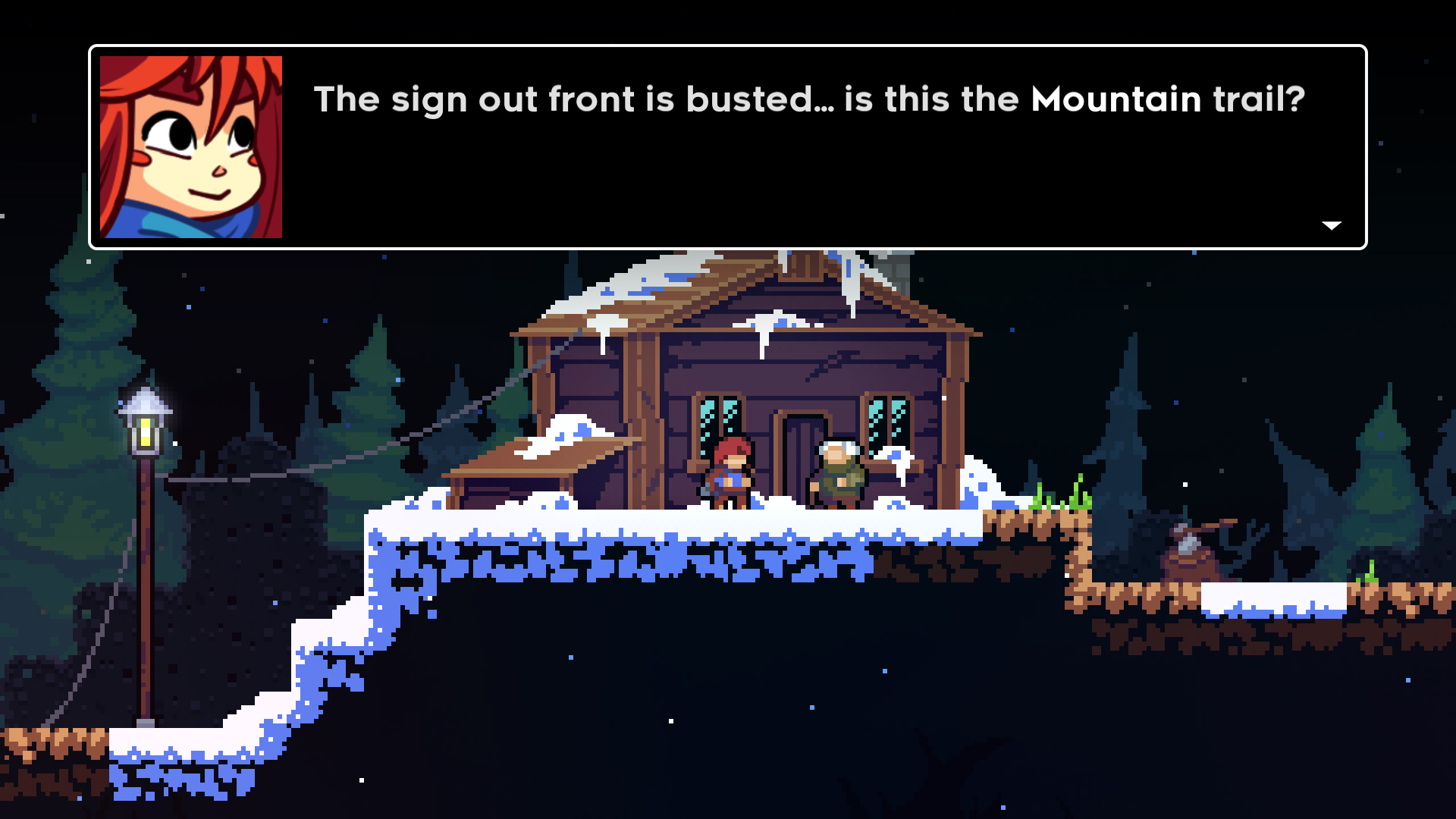
<p><img src="https://images.igdb.com/igdb/image/upload/t_original/fkbchtayhzmfnljfusel.jpg" alt="Screenshot of Celeste" w="689" h="388" />
<em>Screenshot of Celeste, featuring dialogue with an NPC – you’d think this is the story i’m on about, but that’s not the case</em></p>

<p>Celeste’s main intention is to design levels around a <strong>story</strong> – that is, not just be a series of particular inputs the player has to make. So, how is a level split into a story? Effectively, levels need to have a minimum of:</p>
<ul>
  <li>Beginning – the opportunity for the player to scope out the level and key details within it</li>
  <li>Tension – some initial problem for the player to solve</li>
  <li>Climax – some final, generally more difficult problem, for the player to solve</li>
  <li>Resolution – a reward for the player, which can be as simple as level progression, or a collectible</li>
</ul>

<p>Levels may require additional layers of story, and this structure is not strict – <em>in fact, it’s something I’ve entirely made up, but based off of Celeste and its levels</em> – but it serves as a general guideline for designing levels with a story in mind. It’s important not to over-complicate the story. A question that should be constantly asked is: “should this be where the level ends?”. Ensure that each story has variety, as to not feel monotonous, and ensure that levels are digestible, and not overwhelming.</p>

<p>Certain parts of the level should be highlighted by the level design, in order to tell the intended story.</p>

<blockquote class="prompt-info">
  <p>The player should remember the story of the level, and not the series of inputs required to complete said level.</p>
</blockquote>

<h2 id="designing-levels-around-problem-solving">Designing Levels Around Problem Solving</h2>
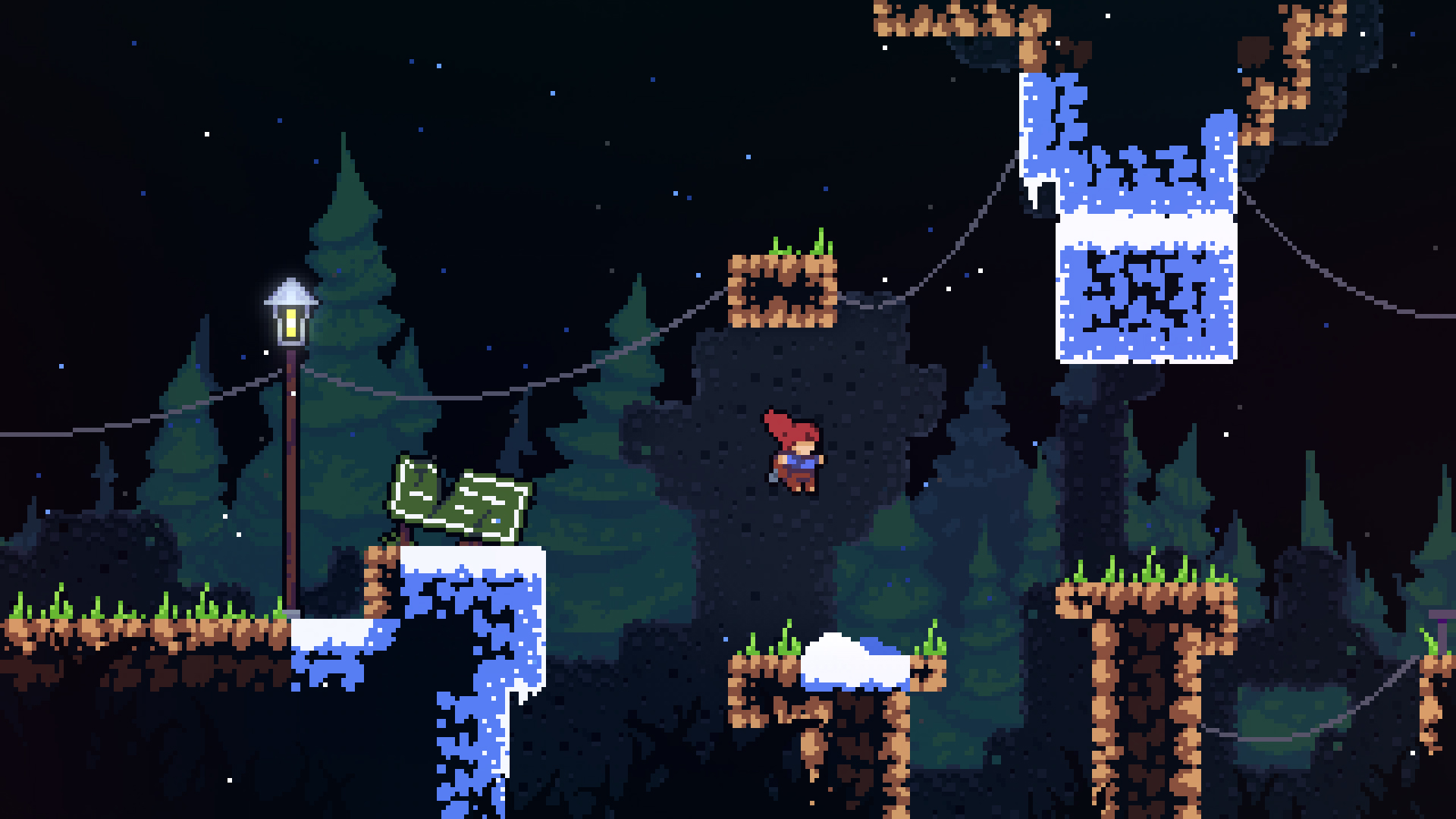
<p><img src="https://images.igdb.com/igdb/image/upload/t_original/rougracf4aao1ebhxxy9.jpg" alt="Screenshot of Celeste" w="690" h="388" />
<em>Screenshot of Celeste, featuring a level near the beginning of the game, with three platforms on the ground, one in the air, and one that will fall</em></p>

<p>Levels in Celeste are made akin to a rock-climbing wall, in that there are a multitude of different ways to complete one obvious goal. Even the simplest of problems, e.g., crossing a small gap with one platform in the middle, should have multiple ways to be solved. In Celeste’s case, this could be the option to dash over the central platform, or jump on each platform individually. Obviously, more complicated levels inherently lend themselves to more variety in level solutions, but it should always be a central focus to ensure different ways of completion.</p>

<blockquote class="prompt-info">
  <p>Different players have different play-styles; all should be accommodated, but also challenged.</p>
</blockquote>

<p>Players should be able to “read” the level easily, i.e., understand the main <em>intended solutions</em> – however, there should not be only one singular solution that the player must follow. Thus, things that are definitely not intended should be highlighted to be such – make impossible things impossible, in order to not have the player hyper-fixate on an, initially, seemingly difficult but possible manoeuvre.</p>

<p>However, once a level is fully designed, it can be beneficial to add, obviously “non-intended” (i.e., not meant to be a part of the standard set of solutions), but possible, difficult ways to solve the problem. This is to reward the experienced player for their skill, and to provide an alternative story for the level.</p>

<blockquote class="prompt-warning">
  <p>It’s crucial that no-one mistakes this as an intended path. These more difficult additions should only come once the level design is 110% finalised.</p>
</blockquote>

<h2 id="designing-levels-around-safety">Designing Levels Around Safety</h2>
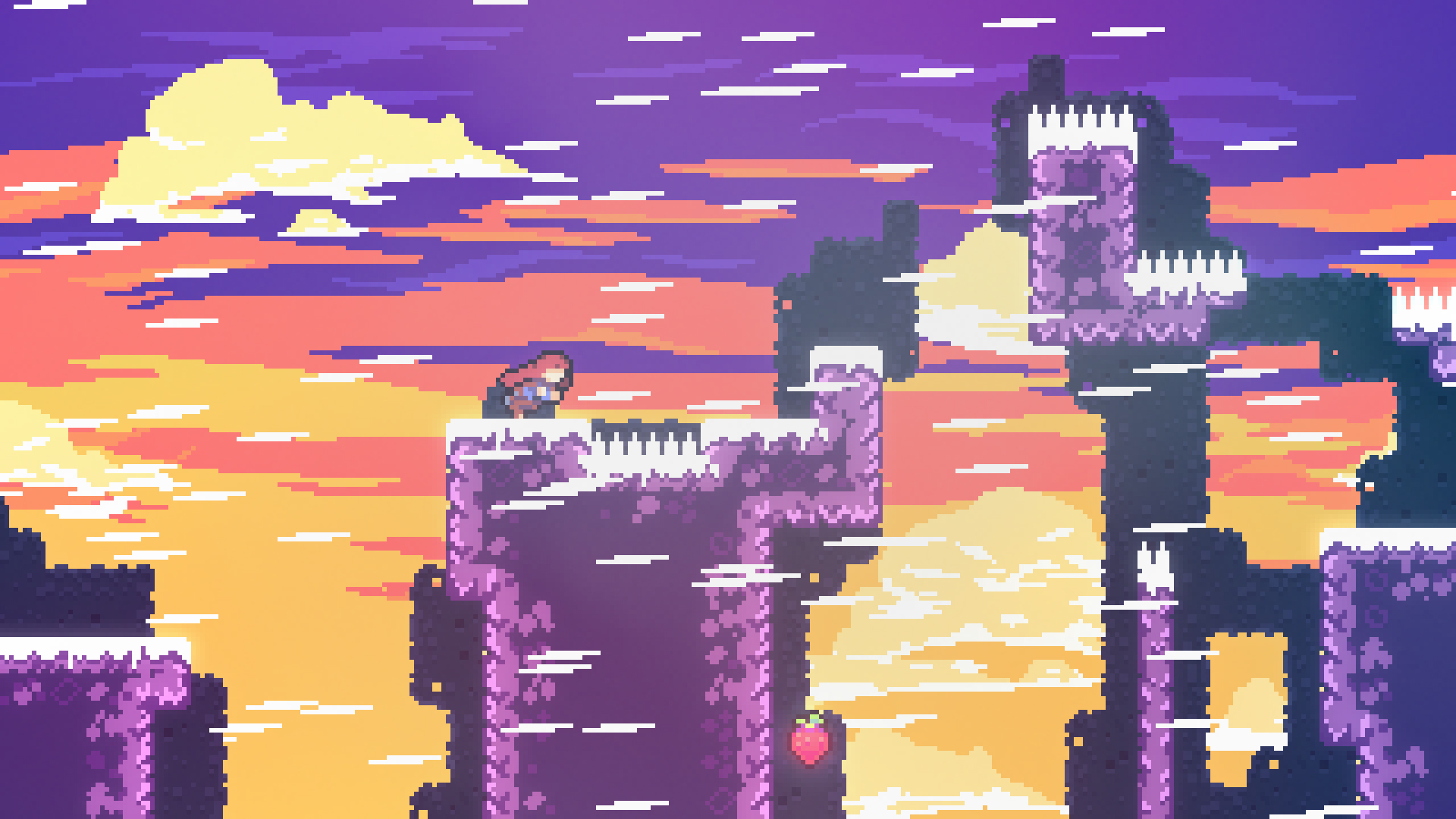
<p><img src="https://images.igdb.com/igdb/image/upload/t_original/zr67hixr4lsfbtg9rlwk.jpg" alt="Screenshot of Celeste" w="689" h="388" />
<em>Screenshot of Celeste, featuring a level near the end of the main game</em></p>

<p>In order for the story of the level to be well-paced, the <strong>safety</strong> during the progression of a level needs to be considered. Here, safety is being defined as how long the player can stay still before being killed, or otherwise failing to solve the problem of the level. So, a generic platform on the ground is considered very safe, whereas a platform that crumbles away after 5 seconds is considered mildly unsafe, and holding onto a ledge without any “grip-strength” is considered extremely unsafe.</p>

<p>The length of a level works in tandem with its safety; a longer level results in more progress lost when failed, thus making the safety lessen as the level progresses. High stakes with long levels amplify the perceived difficulty of the level.</p>

<h2 id="why-this-works">Why This Works</h2>
<p>It’s difficult to understand, and articulate, why this method of level-design works so well. It’s important to recognise that, due to Celeste’s overall structure, over-arching story, and narrative style, it’s likely that the “story” methodology generally lends itself to work well. However, even disregarding Celeste, this level-design philosophy provides some important features:</p>
<ul>
  <li>Levels are made for everyone, making the game feel more approachable, but not annoyingly easy. Ensuring that there are multiple ways to go about solving a level is a sure-fire way to create a game that can have difficulty without feeling frustrating. Never in Celeste does it feel unfair, and this is because the levels are effectively designed for every type of player (or as much as they reasonably can be). This is why play-testing in a platformer game is so, so essential – you need that wide variety of players to provide feedback often.</li>
  <li>Levels are varied, unique, and memorable. Particularly when considering safety, it’s easy to see how thinking about levels in this sense results in variety in the levels’ stories. A long level, with various points to rest, but difficult jumps to perform, feels tense, stressful. However, a short level, with near-to-no points to rest, but comparably easy jumps, feels vigorous, yet satisfying to complete. The safety and length of a level creates an overall perceived difficulty of the level, which can be balanced to stay constant throughout the game, even with such a variety of difficulty in platformer movements. Safety brings about variety, without whiplash, overwhelming the player.</li>
</ul>

<p>Celeste’s overall areas play a significant impact too, particularly with pacing and difficulty, but it’s clear that, even down to the most miniscule parts of level design, Celeste aims to strive for three main things:</p>
<ol>
  <li>Accessibility, through the level’s various solutions to one problem.</li>
  <li>Variation, through examination of the level’s safety, length, and perceived difficulty.</li>
  <li>Intrigue, through the guarantee of an interesting story.</li>
</ol>]]></content><author><name>Malachy Moran-Tun</name></author><category term="Blog" /><category term="Essays" /><category term="game development" /><category term="level design" /><category term="xekino" /><category term="godot" /><category term="platformers" /><category term="celeste" /><summary type="html"><![CDATA[Celeste is one of my favourite games of all time, which is why I obsess over emulating what makes it succeed in my own games – XΞKINO is a platformer, currently very early in development, and as with all platformers, I need to think about how to make it actually fun, i.e., level design. So, I ask myself, why not take a look at one of the greatest platformers – nay, greatest games – of all time.]]></summary></entry><entry><title type="html">I love WINE; it hates me.</title><link href="https://primedpixel.co.uk/blog/how-to/i-love-wine-it-hates-me/" rel="alternate" type="text/html" title="I love WINE; it hates me." /><published>2023-08-13T01:06:58+01:00</published><updated>2023-08-13T01:06:58+01:00</updated><id>https://primedpixel.co.uk/blog/how-to/i-love-wine-it-hates-me</id><content type="html" xml:base="https://primedpixel.co.uk/blog/how-to/i-love-wine-it-hates-me/"><![CDATA[<p><a href="https://www.winehq.org/">WINE</a> is not an emulator, thus comes the acronym <em>“W.I.N.E.”</em>, and is one of my favourite things. Why? Because I’m one of those cretins who had a mildly bad time with Windows, and then decided to sign away my rights and watch way too many <a href="https://www.youtube.com/c/TheLinuxExperiment">The Linux Experiment</a> videos for my own good – which is a long winded way of saying I began to use Linux. Honestly, the switch to Linux wasn’t all too bad, and only two pieces of software were causing me trouble (i.e., had no equivalent that I initially planned on using).</p>

<p>WINE, via anything but emulation, allows Windows executables to run natively <em>(i think it counts as natively?)</em> on Linux. So, problem solved… right? Take any applications you used to run on Windows, and just shove ‘em through the magic that is WINE?</p>

<h2 id="game-development">Game Development</h2>

<p><img src="https://coal.gamemaker.io/sites/5d75794b3c84c70006700381/content_entry5f1ed2a9c4508d000782dcf3/5f5b8c56dbb16000072579be/files/gms2up.jpg?1678295770" alt="GameMaker: Studio 2 Logo" w="1920" h="1080" />
<em>The GameMaker: Studio 2 logo (now called, simply, “GameMaker”)</em></p>
<p>When I made the move to Linux, I still used <a href="https://gamemaker.io/">GameMaker</a> (at the time called GameMaker: Studio 2) for creating games. It was the first game engine I properly put some time in, primarily through the likes of <a href="https://www.youtube.com/@uheartbeast">Heartbeast</a> and <a href="https://www.youtube.com/@ShaunJS">Shaun Spalding</a>. But ever since the former began using it, a, now familiar, name began to pop up: <strong>Godot</strong>. I plan to talk about Godot in much more detail, but let’s just say that it’s <em>f*cking fantastic</em> – definitely a change from what I’m used to, and certainly something that I need to properly get stuck in to before I make something large scale, but brilliant nonetheless.</p>

<p>Godot became GameMaker’s replacement. Sure, I tried running it through WINE, but alas to no avail. Then I tried an integrated virtual machine, but that’s really clunky and definitely something that I wouldn’t want to consistently use. Because of this – and the fact that I needed to learn Godot for my A-Level programming project, because of <a href="https://www.reddit.com/r/gamemaker/comments/rydlkz/rantish_cant_use_gamemaker_for_my_alevel_computer/">reasons that I implore you to read about</a> – I stuck with using Godot, and I’m really quite glad with my decision. Plus, it’s always good to get out of your comfort zone, and learn something new. There’s no doubt that Godot has improved my ability to program simply due to it being different, requiring me to think differently about how to approach problems.</p>

<h2 id="music-production">Music Production</h2>
<h3 id="reaper">REAPER</h3>
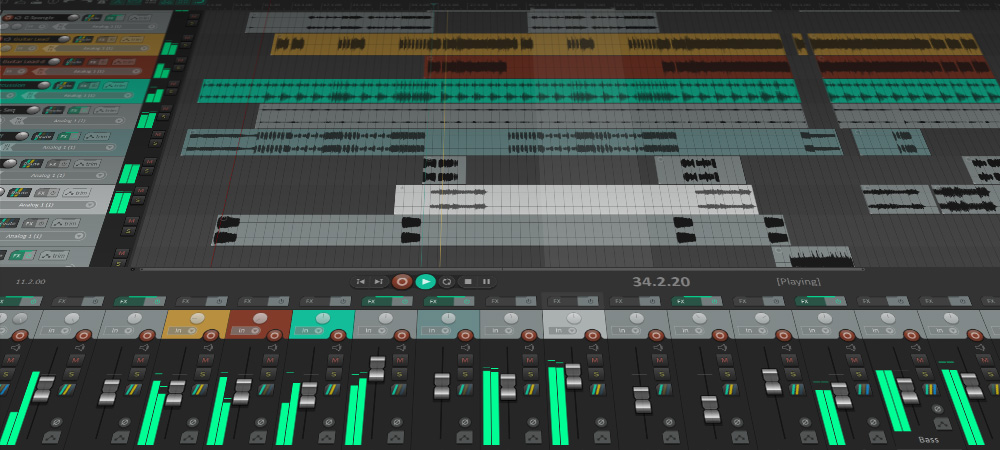
<p><img src="https://www.reaper.fm/v6img/ss_persp_v63.jpg" alt="Reaper DAW" w="1000" h="450" />
<em>A screenshot of the DAW “Reaper”, rotated on a 3D plane, or something like that, idk the technical term</em></p>
<p>Okay… so why not use a DAW made specifically for Linux? I mean, I did the same for everything else (e.g., began using <a href="https://www.gimp.org/">GIMP</a> instead of <a href="https://getpaint.net/">paint.net</a>). Well, I tried <a href="https://www.reaper.fm/">REAPER</a>… but VST support requires WINE anyway, and if I was to run the Windows version of REAPER through WINE anyway, I may as well stick with what I’m used to. That’s not to say I will forever, to be fair. REAPER is certainly an extremely capable DAW, and probably much better than what I currently use, particularly for WINE compatibility. And you’ll start to understand why shortly.</p>

<h3 id="mixcraft">Mixcraft</h3>

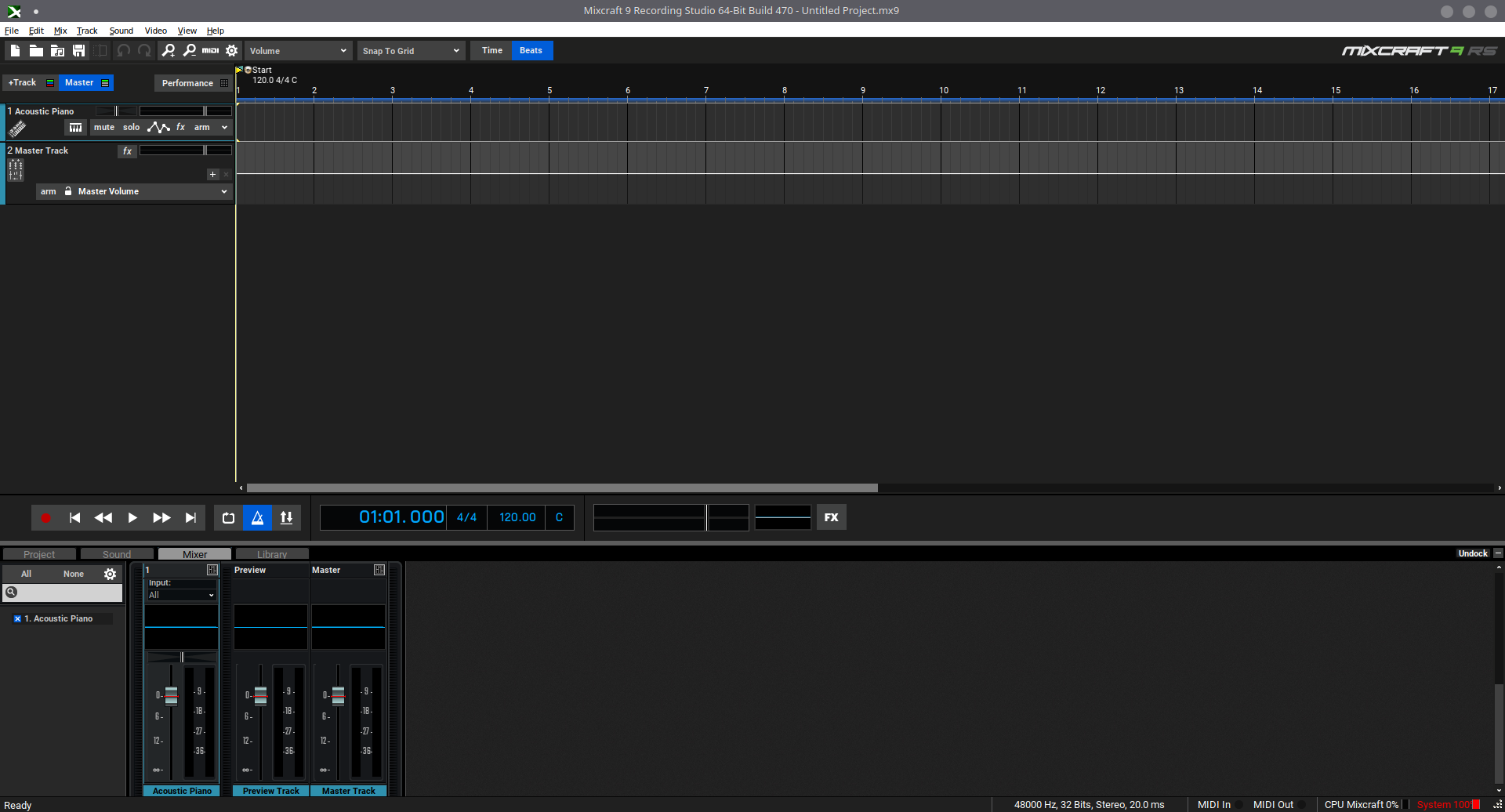
<p><img src="/images/i-love-wine-it-hates-me/mixcraft-screenshot.png" alt="Mixcraft DAW" w="1920" h="1036" />
<em>A screenshot of an empty project inside Mixcraft, with the mixer panel open at the bottom</em></p>
<p>Mixcraft is the name of the game. Specifically, Mixcraft 9: Recording Studio. Why 9? Well, it used to be the latest until version 10, very recently, came out. But I’m fine with 9, and got it all working on Linux… sort of.</p>

<p>WINE can be complicated to set up, particularly for a novice Linux user, such as myself. Many programs exist (particularly for gaming) to help with this, such as <a href="https://lutris.net/">Lutris</a>, or even <a href="https://store.steampowered.com/">Steam</a> through <a href="https://github.com/ValveSoftware/Proton">Proton</a>, a custom version of WINE optimised for gaming. To help with my DAW troubles, however, I decided to use <a href="https://usebottles.com/">Bottles</a>. Bottles is a program that manages WINE prefixes (i.e., separate configurations of WINE, all running in different locations), and ensures a sandboxed environment, which can be useful a lot of the time. It <em>can</em> also be a bloody pain, but doesn’t end up interrupting my workflow, really.</p>

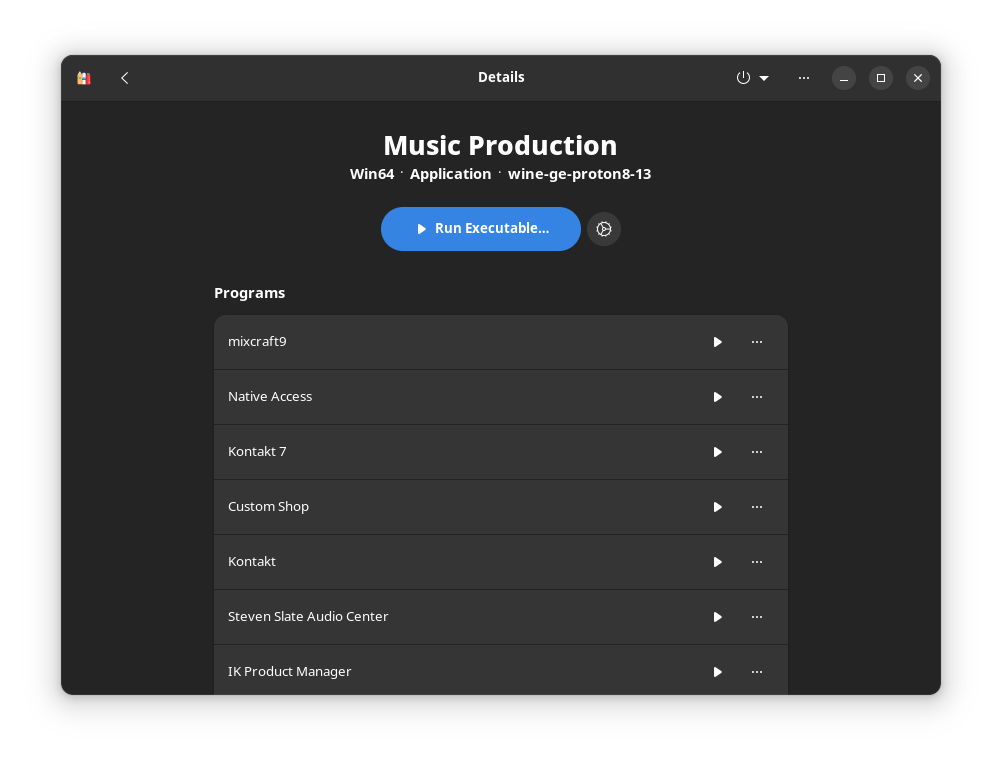
<p><img src="/images/i-love-wine-it-hates-me/music-production-bottle.png" alt="Music Production Bottle in Bottles" w="1002" h="762" /> So, after some initial set up, I managed to get Mixcraft working… in the Flatpak version of Bottles. Whilst this was actually a good thing, as Bottles encourages running through a Flatpak to ensure full sandboxing, it still baffles me that I could only get Mixcraft to work in this particular version, even if the runner is the same. What changes you ask? Well, for whatever reason, the non-Flatpak version of Bottles cannot use my audio device, thus I get absolutely no audio whatsoever – which is kind of important if making music, I think.</p>
<p>Either way, when all is said and done, Mixcraft works quite well, and I’ve got VST support through WINE. Sure, there’s been some hiccups, but overall nothing that 30 minutes on Google couldn’t fix, such as the dreaded <em>Native Instruments VST install</em>. Although, ASIO is a pain in the backside that I just can’t deal with right now – if you need low latency for recording from something like a MIDI controller, be my guest and get <a href="https://github.com/wineasio/wineasio">WineASIO</a> working, but for me, it’s <a href="https://www.reddit.com/r/winehq/comments/wmyj90/cant_make_wineasiodll/">more trouble than it’s worth</a> <em>(mainly because <a href="https://jackaudio.org/">JACK</a> is more trouble than it’s worth)</em></p>

<h3 id="mouse-issues">Mouse Issues</h3>

<p>So, why write all this down in a post on my website? Well, after needing to reinstall Linux for some reason I’m yet to fully understand <em>(something completely locked the file system, and made it impossible to boot, and also took up all the space on the drive?)</em>, and setting up the Bottle just fine, I began to run into a strange problem: the mouse sporadically froze. Seemingly at random intervals, but extremely often, my mouse would stop working. And even weirder, the light at the bottom of the mouse flashed whilst it was frozen, indicating it was disconnected. Surely enough, closing Mixcraft resolved this completely, and I had never encountered any other problems with the mouse on Linux. So, what the hell is up with that? Well, I’m not entirely sure what caused the issue, but I did manage to resolve it. I ended up changing three settings in Bottles to resolve this issue:</p>

<ul>
  <li>Change “Synchronisation” under “Performance” to <em>“Esync”</em></li>
  <li>Turn on <em>“LatencyFleX”</em> under “Components” (to the latest version available)</li>
  <li>Change the “Runner” under “Components” to <em>“GE Wine”</em></li>
</ul>

<p>Esync is likely to be the only thing that ended up mattering here, but I also think the other two generally improved performance in the Bottle. For those who don’t know, <a href="https://github.com/GloriousEggroll/wine-ge-custom">GE WINE</a> is a custom build of WINE based off of Steam’s “Proton”, but for use outside of Steam with non-steam games and applications. It’s spectacular to have such a thriving community on Linux creating what are almost necessities for free, and keeping them open source. So, massive shout-out to <a href="https://github.com/GloriousEggroll">Glorious Eggroll</a> for GE WINE, and all the <a href="https://wiki.winehq.org/Who's_Who">people who make WINE possible</a> in the first place.</p>

<h3 id="crashing">Crashing</h3>

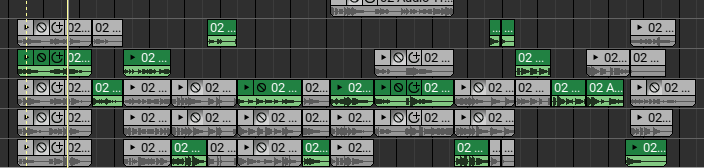
<p>Even with that, WINE is not perfect, and I still get weird, and frankly annoying crashes in Mixcraft, from time to time. This is <em>not</em> an insult or criticism to the people who make WINE possible, however, but rather a warning to those who could – and should – use WINE. So, for the one person that sees this, please <em>for the love of all things holy</em>, do <strong><em>not</em></strong> press play and save in Mixcraft at the same time. You will corrupt your project file and have to use a backup, which is a minor inconvenience if you didn’t save recently. Especially if you just cut up a bunch of takes playing the Casino Night Zone theme from Sonic 2.</p>

<p><img src="/images/i-love-wine-it-hates-me/casino-night-zone-takes.png" alt="Casino Night Zone takes inside Mixcraft DAW" w="704" h="168" /></p>

<h2 id="update">Update</h2>

<p>Okay so, turns out this problem was definitely not exclusive to Mixcraft. Mouse stuttering issues in WINE seem to be commonplace, with <a href="https://bugs.winehq.org/show_bug.cgi?id=46976">certain bugs plaguing the Bugzilla forums</a>. However, I believe I’ve come across two additional things that, <em>at least partially</em>, rectify this issue.</p>

<p>You see, the issue came back whilst playing Subnautica through Proton (and ProtonGE). The first thing I did after a lot (and I mean <em>a lot</em>) of Googling was enabling C-States in my BIOS (or changing it from “automatic” to “enabled”). This seemed to help the stuttering, at least partially, but it didn’t completely fix it. My previous solution of E-Sync or F-Sync didn’t seem to change anything.</p>

<p>Randomly, I was trying to get my microphone to be picked up, but nothing would detect it. A quick gander into the audio settings and I noticed my audio interface (Scarlet 2i2) was not set to “Direct Scarlet 2i2 USB”, unlike how it previously was before I had to reinstall, due to an unrelated issue. So, I changed it from whatever it was before – maybe Pro Audio but I’m not certain – and two things changed: the sound quality was improved, particularly soundstage, unless that’s just placebo. But more importantly, the mouse stuttering seemed to have completely vanished.</p>

<p>Back when Subnautica was in early access, I had trouble running it on Windows due to audio issues, and the only solution was using Microsoft’s default drivers, rather than the Realtek ones. So, the mouse stuttering issue in WINE may, in fact, be related to applications that heavily rely on certain audio features, e.g., DAWs. Obviously, there’s also the fact that it could simply be coincidence, but it’s certainly something to note. Anyway, that’s all for this update. TL;DR: enable C-States and check audio settings in Linux, it might just fix it completely.</p>]]></content><author><name>Malachy Moran-Tun</name></author><category term="Blog" /><category term="How-To" /><category term="music production" /><category term="game development" /><category term="linux" /><category term="wine" /><category term="gamemaker" /><category term="godot" /><summary type="html"><![CDATA[WINE is not an emulator, thus comes the acronym “W.I.N.E.”, and is one of my favourite things. Why? Because I’m one of those cretins who had a mildly bad time with Windows, and then decided to sign away my rights and watch way too many The Linux Experiment videos for my own good – which is a long winded way of saying I began to use Linux. Honestly, the switch to Linux wasn’t all too bad, and only two pieces of software were causing me trouble (i.e., had no equivalent that I initially planned on using).]]></summary></entry><entry><title type="html">Hi, I’m Primed Pixel</title><link href="https://primedpixel.co.uk/blog/introduction/" rel="alternate" type="text/html" title="Hi, I’m Primed Pixel" /><published>2023-08-05T02:18:52+01:00</published><updated>2023-08-05T02:18:52+01:00</updated><id>https://primedpixel.co.uk/blog/introduction</id><content type="html" xml:base="https://primedpixel.co.uk/blog/introduction/"><![CDATA[<p>Hey! It’s me: your friendly neighbourhood person on the Internet, who decided to recreate a website at 2 in the morning (because don’t we all!). If you’ve found me on a social media and randomly decided, for whatever reason, to click on my website and read what I assume will be a pinned post, hi? I guess?</p>

<p>I’m Malachy Moran-Tun, a massive nerd, and I like to create stuff on the Internet! Usually it’s quite bad, if I’m honest – but I swear sometimes this weird thing called a miracle happens and I make something <em>tolerable</em>. Big projects can be found on the sidebar, with separate pages describing what on earth they on, and social links are found just below.</p>

<h2 id="game-development">Game Development</h2>

<p>The main thing I’m currently focusing on (aside from starting a degree soon, I heard those require at least <em>some</em> effort) is game development – or gamedev for short! I’m planning on making regular blog posts for updates on said games, so for now I’ll just politely link drop my <a href="https://primedpixel.itch.io">itch.io page</a> and no-one needs to get mad.</p>

<h2 id="music-production">Music Production</h2>

<p>I also quite enjoy creating my own music. Whilst this originally stemmed from gamedev and creating soundtracks for my own stuff, it quickly expanded into both soundtrack production and general music production (i.e., songwriting, composing – the works). But I’m also really secretive about the songwriting stuff so anything covered pretty much anywhere on the Internet will be about my game soundtracks.</p>

<p>Said soundtracks can be found on pretty much all music streaming platforms. The common ones are linked below, but have a search if you use something else; it’ll probably be there!</p>

<ul>
  <li><a href="https://open.spotify.com/artist/4vae5dm3sk6jtWNcBPXVxU">Spotify</a></li>
  <li><a href="https://music.apple.com/us/artist/primed-pixel/1541951500">Apple Music</a></li>
  <li><a href="https://music.youtube.com/channel/UCSHoDy6e5AA-erUMKcXaZAQ">YouTube Music</a></li>
  <li><a href="https://www.amazon.com/music/player/artists/B08P44G7FP/primed-pixel">Amazon Music</a></li>
  <li><a href="https://primedpixel.bandcamp.com/">Bandcamp</a></li>
</ul>

<h2 id="youtube">YouTube</h2>

<p>I also am an avid content creator – <em>christ it sounds like i’m writing a bad CV here</em>. However, does that mean I post regularly? No! Of course not, and it’s very silly to assume such. I pretty much focus on three channels: gamedev, music production, and gaming (or “let’s plays” if we’re back in 2012 now).</p>

<h3 id="primed-pixel-music"><a href="https://www.youtube.com/c/PrimedPixelMusic">Primed Pixel Music</a></h3>

<p>My music channel is currently the one that’s received the most attention, although I have a feeling that won’t be the case in the near future. Here I mainly post covers – or <em>sigh</em>… remixes – of video game music. The most popular video so far (that wasn’t just from when I used the channel for general things, including gamedev) is… not my finest work (at least I think so) – but the most popular that I actually like is below!</p>

<!-- Courtesy of embedresponsively.com -->

<div class="responsive-video-container">
    <iframe src="https://www.youtube-nocookie.com/embed/-xvMmV-hd03A" title="YouTube video player" frameborder="0" webkitallowfullscreen="" mozallowfullscreen="" allowfullscreen=""></iframe>
  </div>

<h3 id="primed-pixel-games"><a href="https://www.youtube.com/channel/UCyRLDg8W_QVKAwDZArN7MuA">Primed Pixel Games</a></h3>

<p>Now this is the channel that I expect to see become much more active, with videos such as the one below, but with a bit more… <em>personality</em> to them (hopefully). I’m currently in the process of writing the script for this new “style” of video, although content-wise it’s fairly similar.</p>

<p>In the future, this might expand a bit further to retro gaming tech, but I’m not so certain if I want to exclusively bundle that in with the gamedev stuff yet, particularly how it’s way off my radar.</p>

<!-- Courtesy of embedresponsively.com -->

<div class="responsive-video-container">
    <iframe src="https://www.youtube-nocookie.com/embed/-LHcRUmmlZWA" title="YouTube video player" frameborder="0" webkitallowfullscreen="" mozallowfullscreen="" allowfullscreen=""></iframe>
  </div>

<h3 id="primed-pixel-plays"><a href="https://www.youtube.com/channel/UC1yPj1dewYOFjHvh9yeUpIA">Primed Pixel Plays</a></h3>

<p>No way! Someone born in 2005 used to make Minecraft videos? Nah mate, you’re having me on.</p>

<p><em>seriously I don’t know what’s to happen with this channel – but it exists!</em></p>

<h2 id="addendum">Addendum</h2>

<p>However, just because I’ve distinctly categorised two things doesn’t mean that’s exclusively what I’ll talk about on here. Think of it as a more formal social media, i.e., not as sh*t-posty as Twitter, but certainly not as formal as my non-existent LinkedIn.</p>

<p>If you read all that, then wow I must have gained popularity since I wrote this, you saddo (<em>thanks :)</em>)</p>]]></content><author><name>Malachy Moran-Tun</name></author><category term="Blog" /><category term="game development" /><category term="music production" /><category term="youtube" /><summary type="html"><![CDATA[Hey! It’s me: your friendly neighbourhood person on the Internet, who decided to recreate a website at 2 in the morning (because don’t we all!). If you’ve found me on a social media and randomly decided, for whatever reason, to click on my website and read what I assume will be a pinned post, hi? I guess?]]></summary></entry></feed>